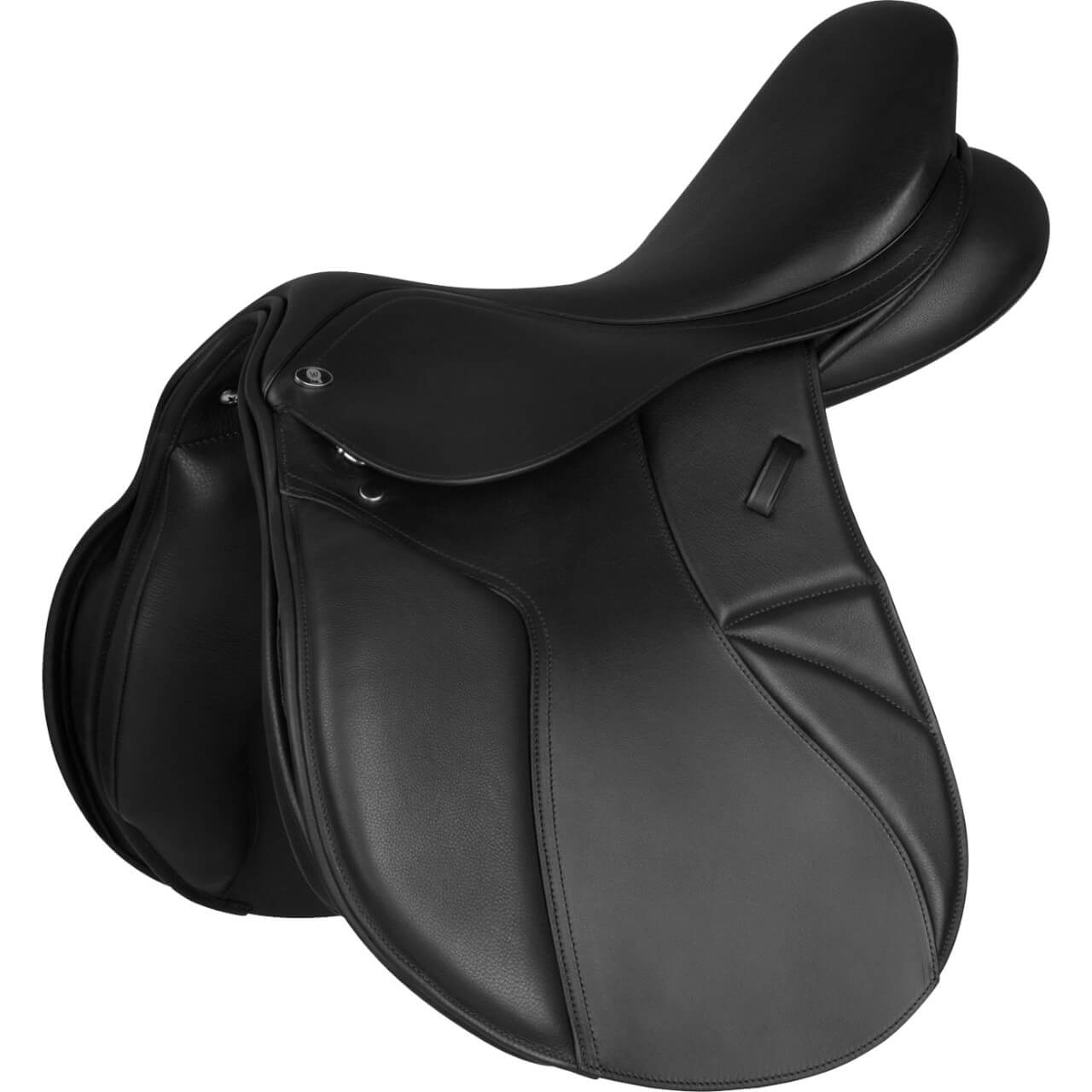
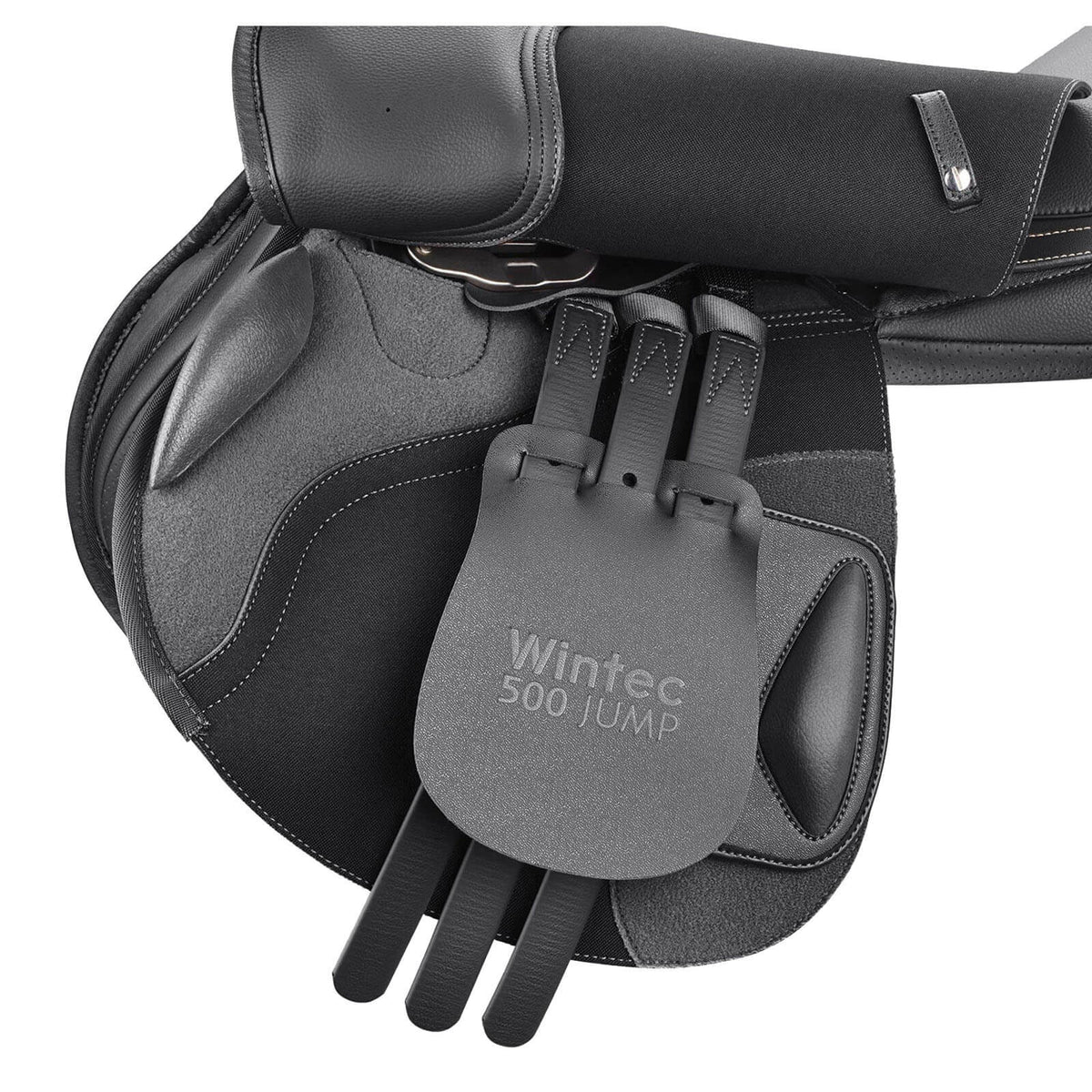
Its longer cut, short and significantly forward-set saddle flaps, and large, pronounced knee rolls clearly distinguish the jumping saddlefrom a dressage saddle. This particular saddle shape ensures stable support for the show jumper after a jump and helps maintain balance. Riding with short stirrup leathers and slightly bent knees facilitates a sporty and light seat at the canter, as well as effortless rising out of the saddle. The thickly padded knee rolls keep the knees stably positioned, and the close proximity of the rider's calves to the horse's body allows for optimal communication between rider and horse. Thejumping saddletree is usually flatter, and many manufacturers describe the seat as semi-deep, which offers additional comfort. A low cantle increases the horse's freedom of movement, while effective padding cushions landings after jumps and protects the horse's skeletal structure.
The use of robust, durable leather, whether from calf or bovine, guarantees jumping saddlesa long lifespan with proper care. This investment particularly pays off with frequent use, intensive training, and participation in professional show jumping competitions.