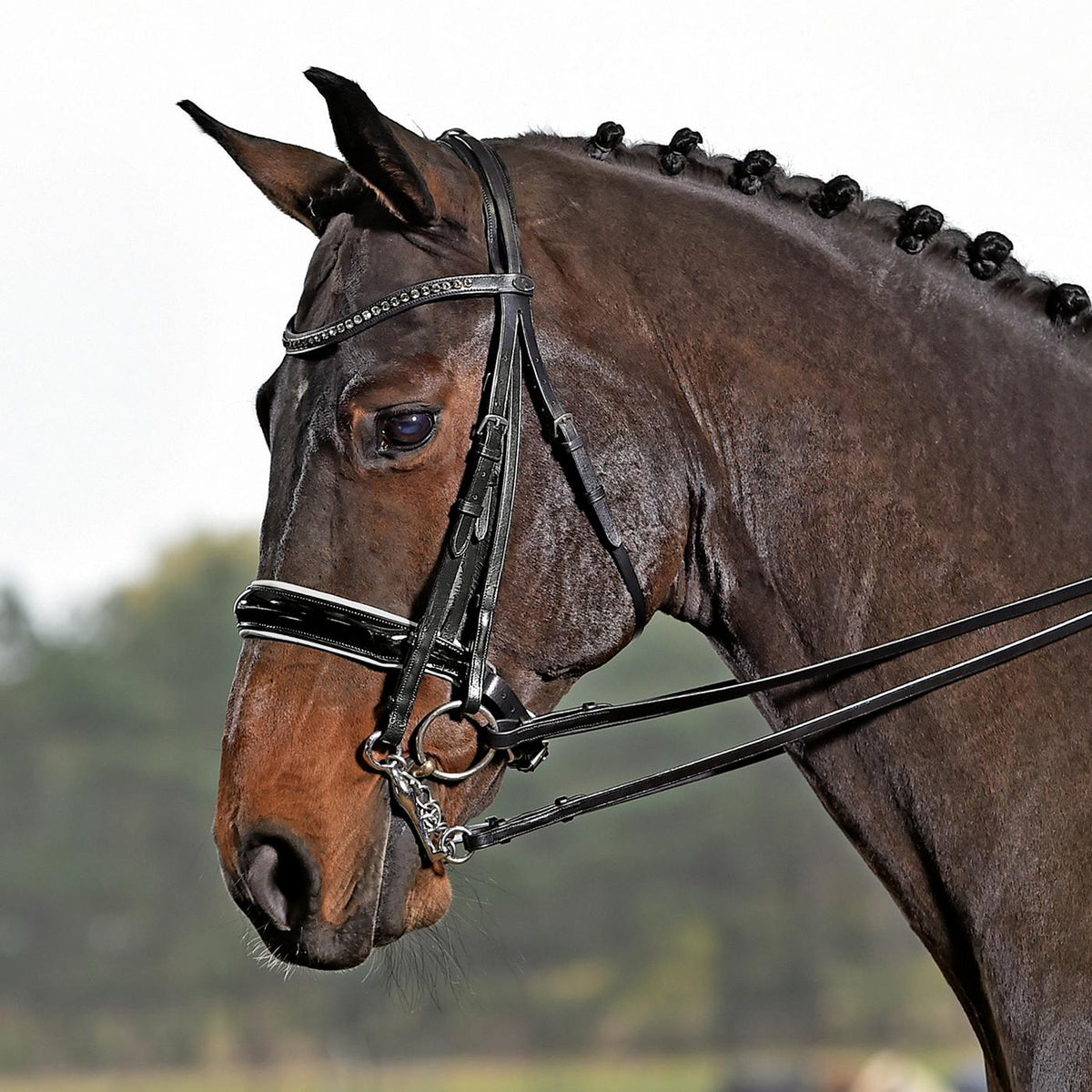
Structure & Effect of a Double Bridle
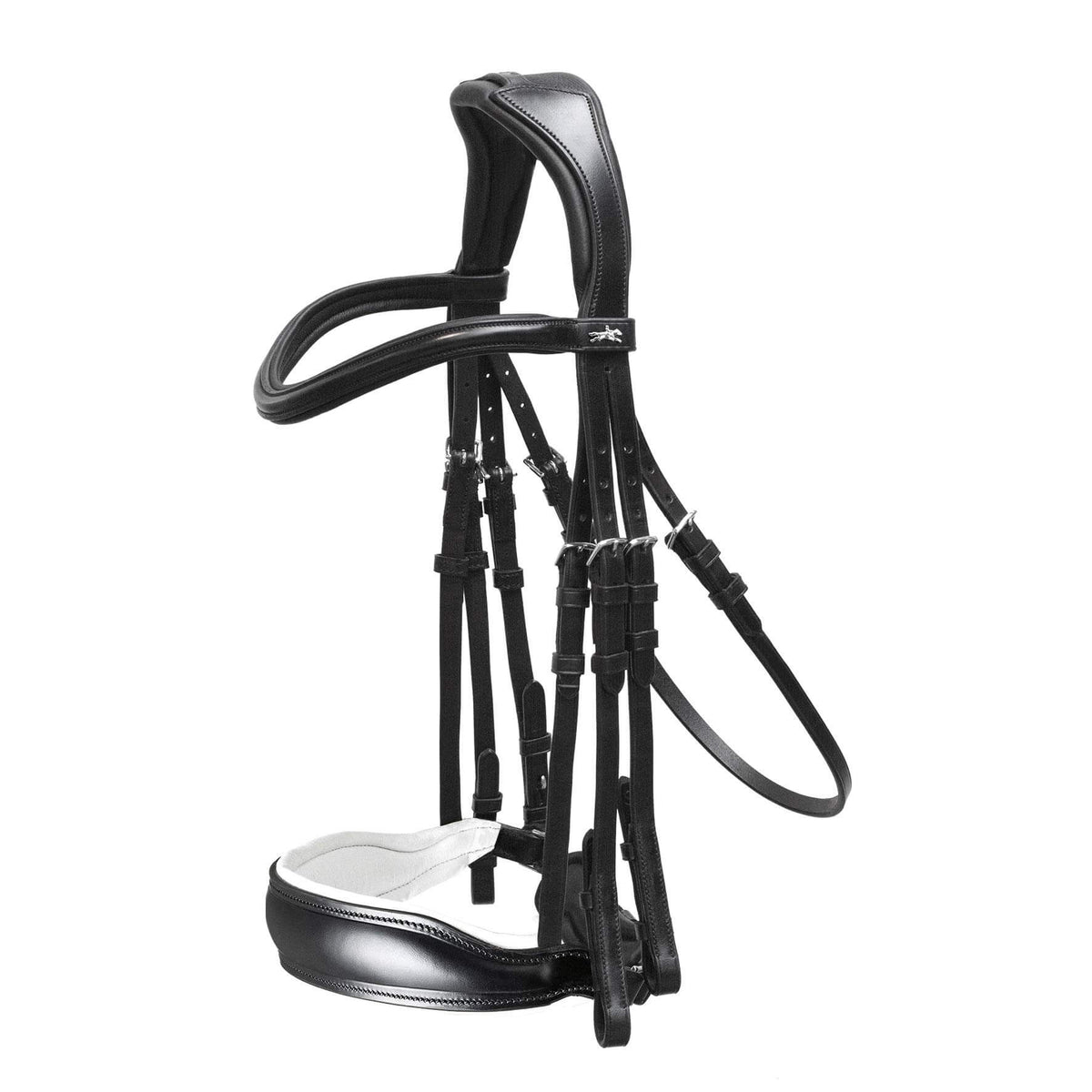
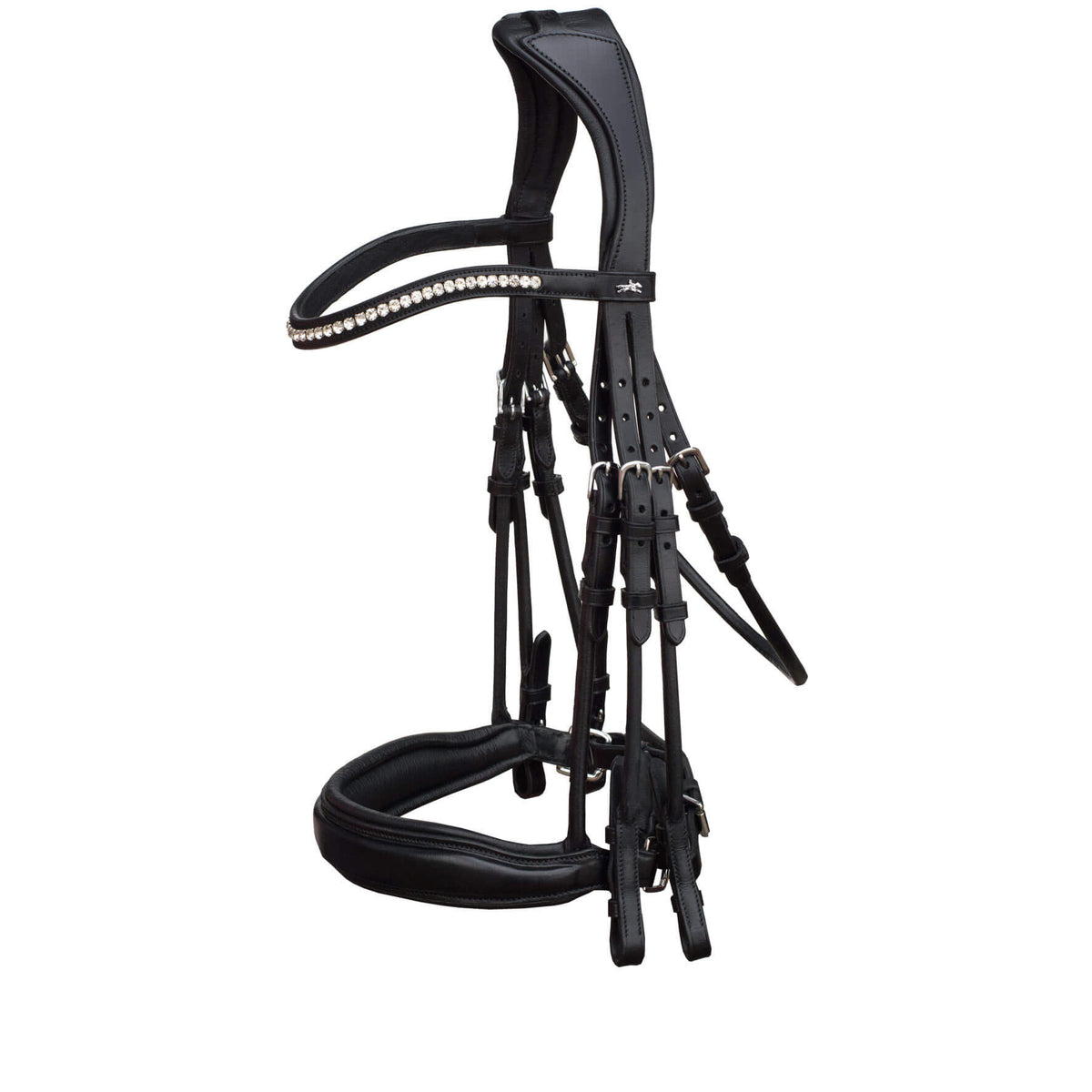
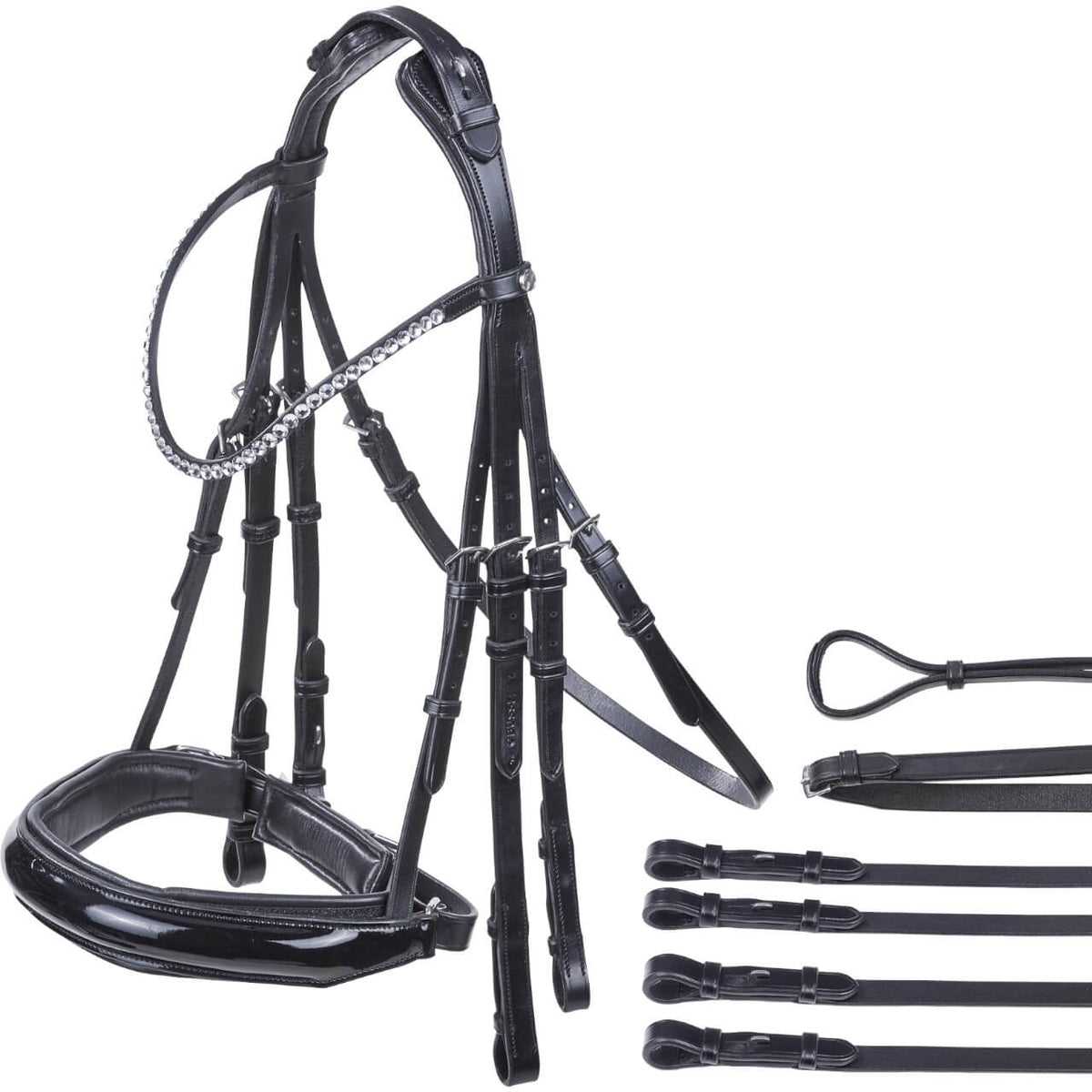
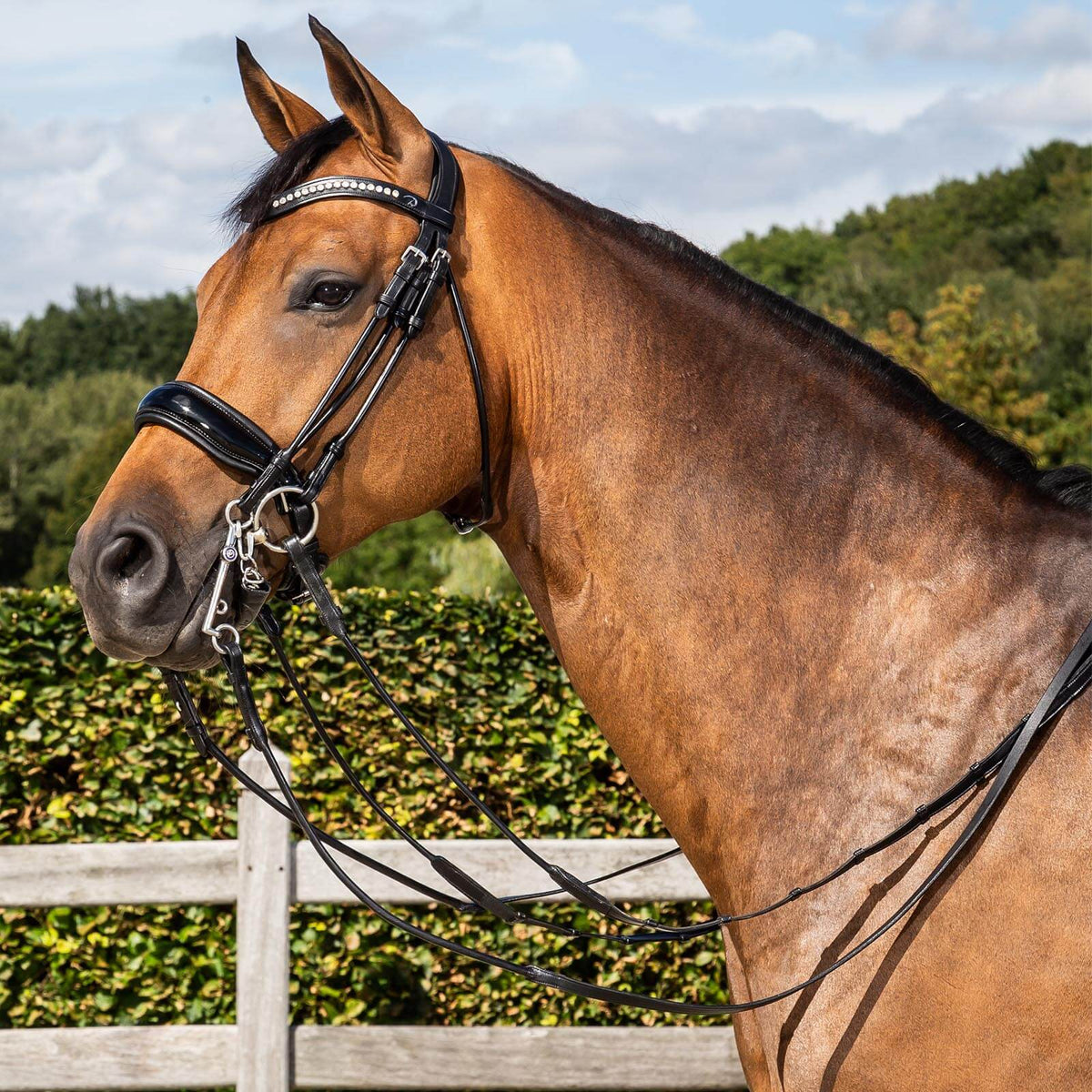
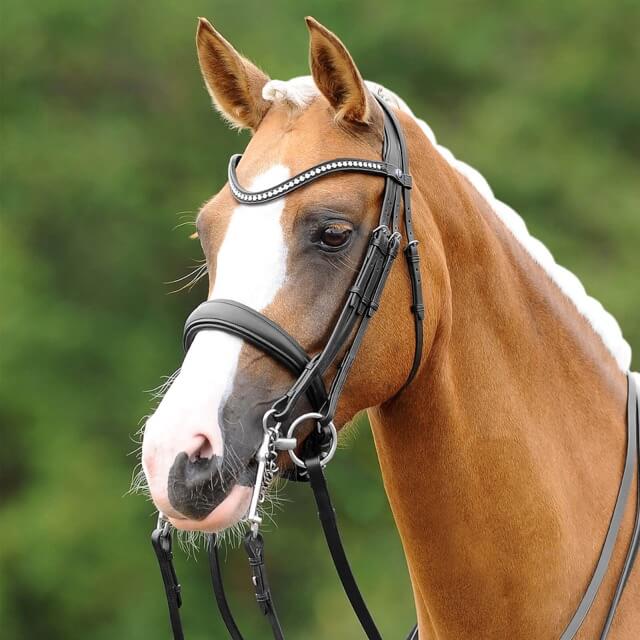
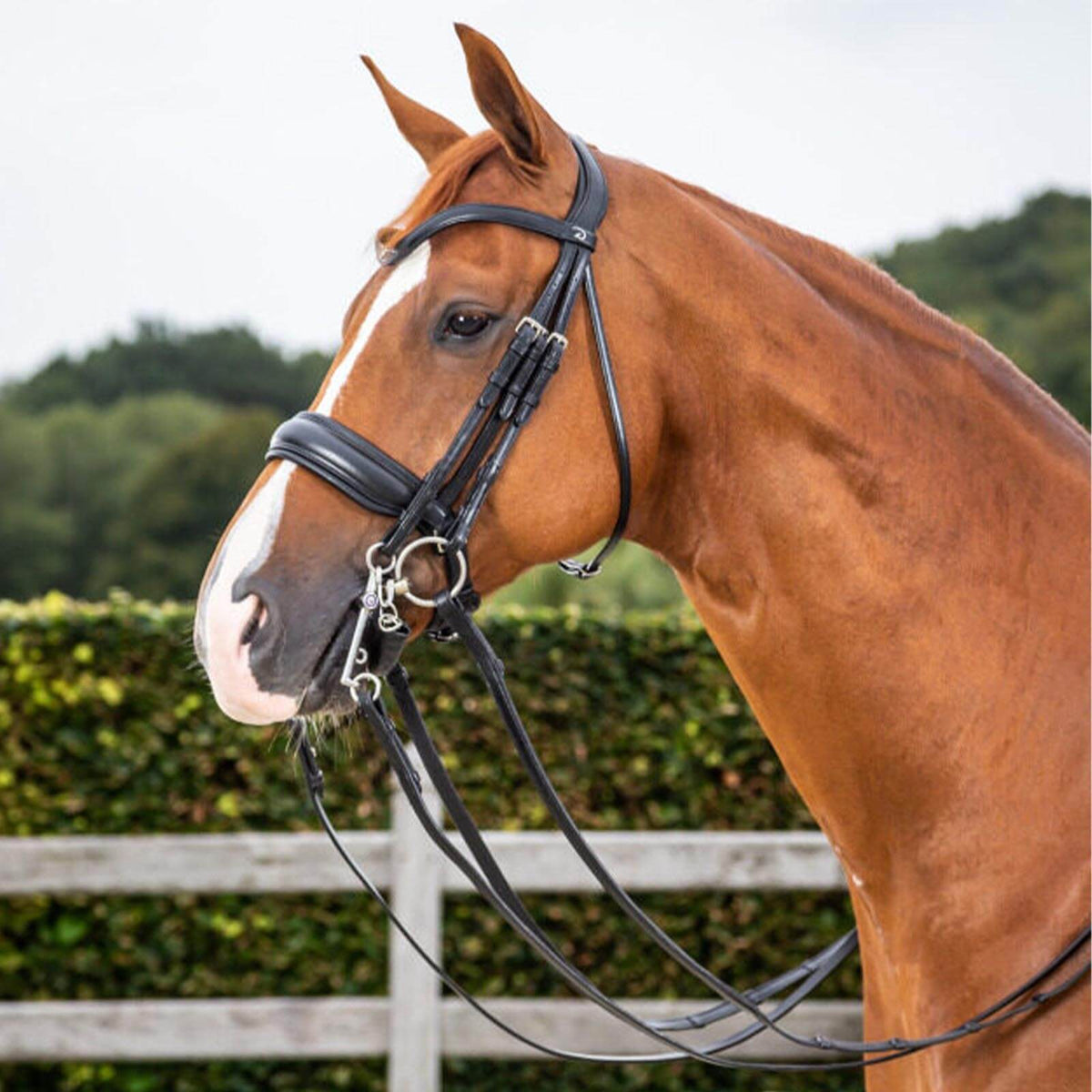
A double bridlediffers from a snaffle bridle by characteristic features:
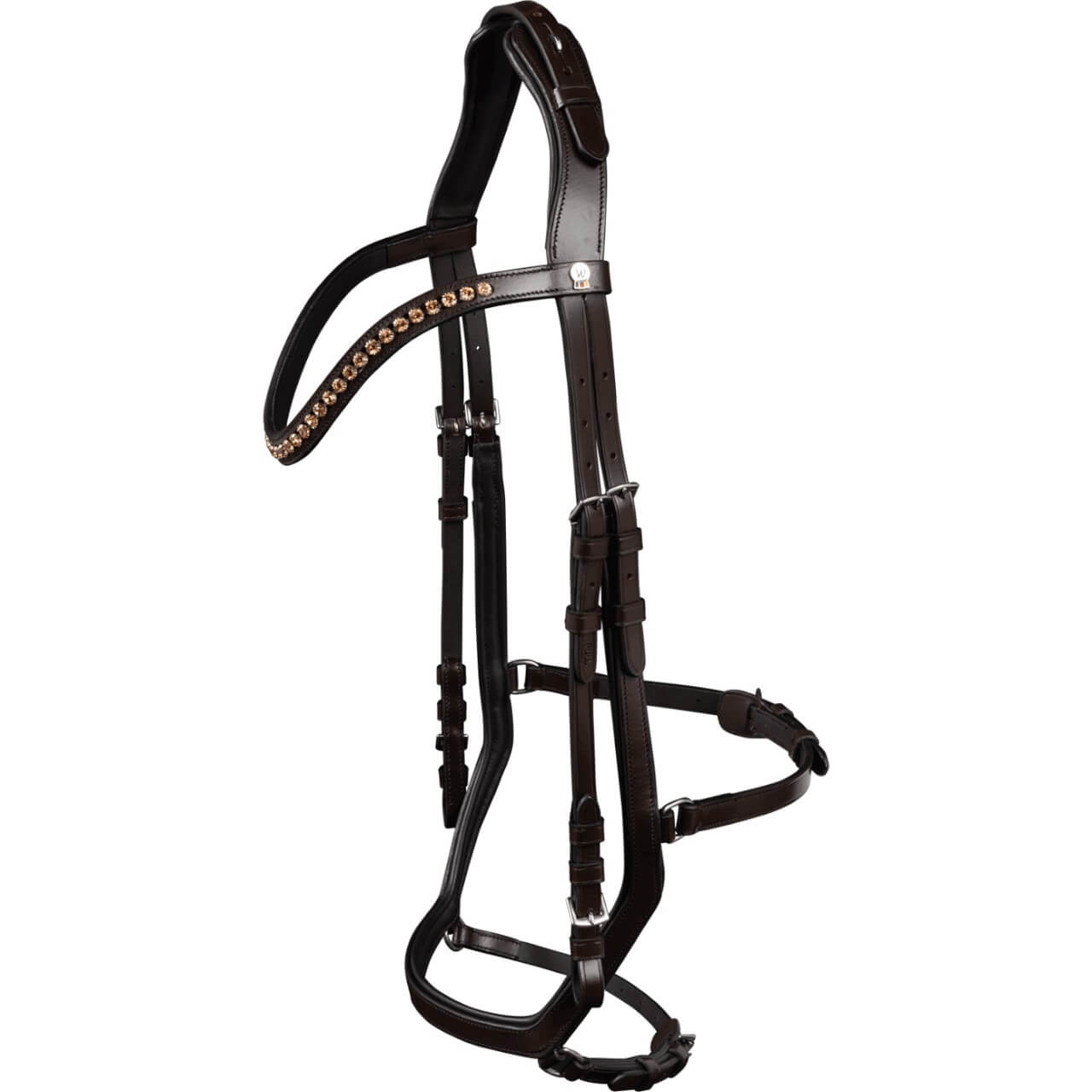
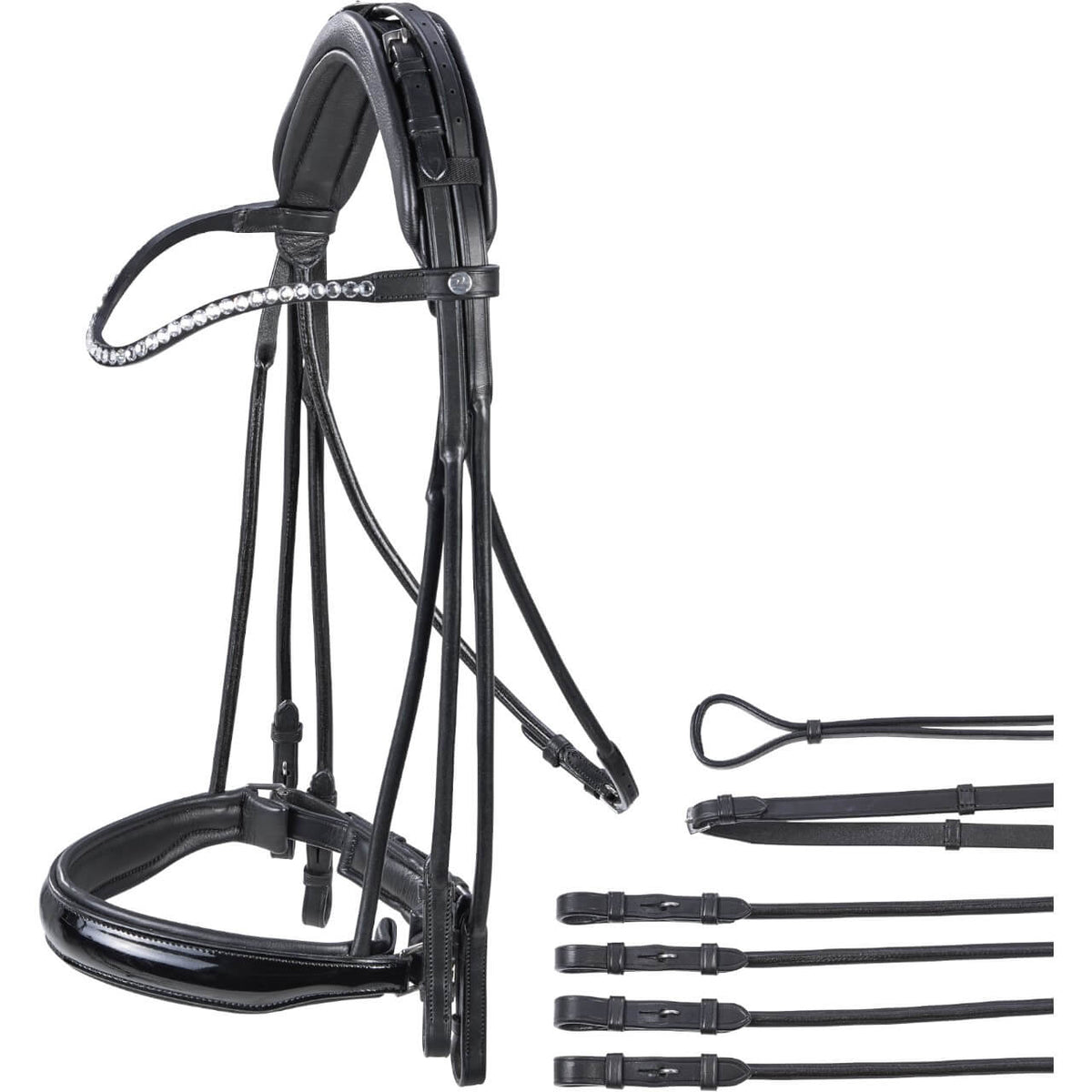
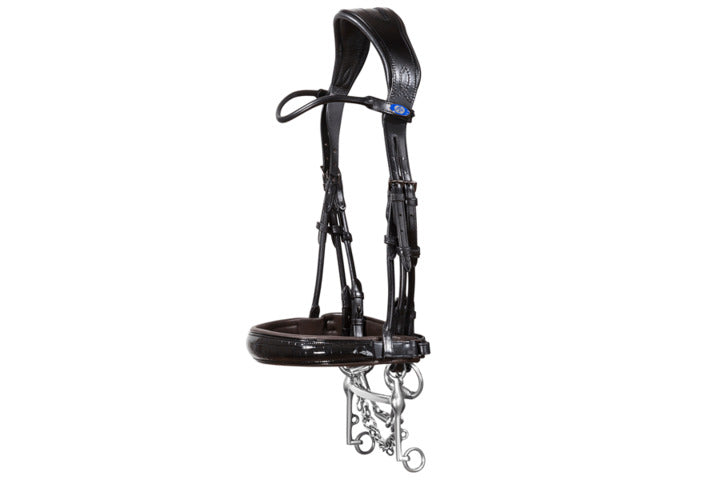
- Two cheekpieces: In contrast to a snaffle bridle, a double bridleallows the use of either a single or double-jointed snaffle bit as well as a curb bit.
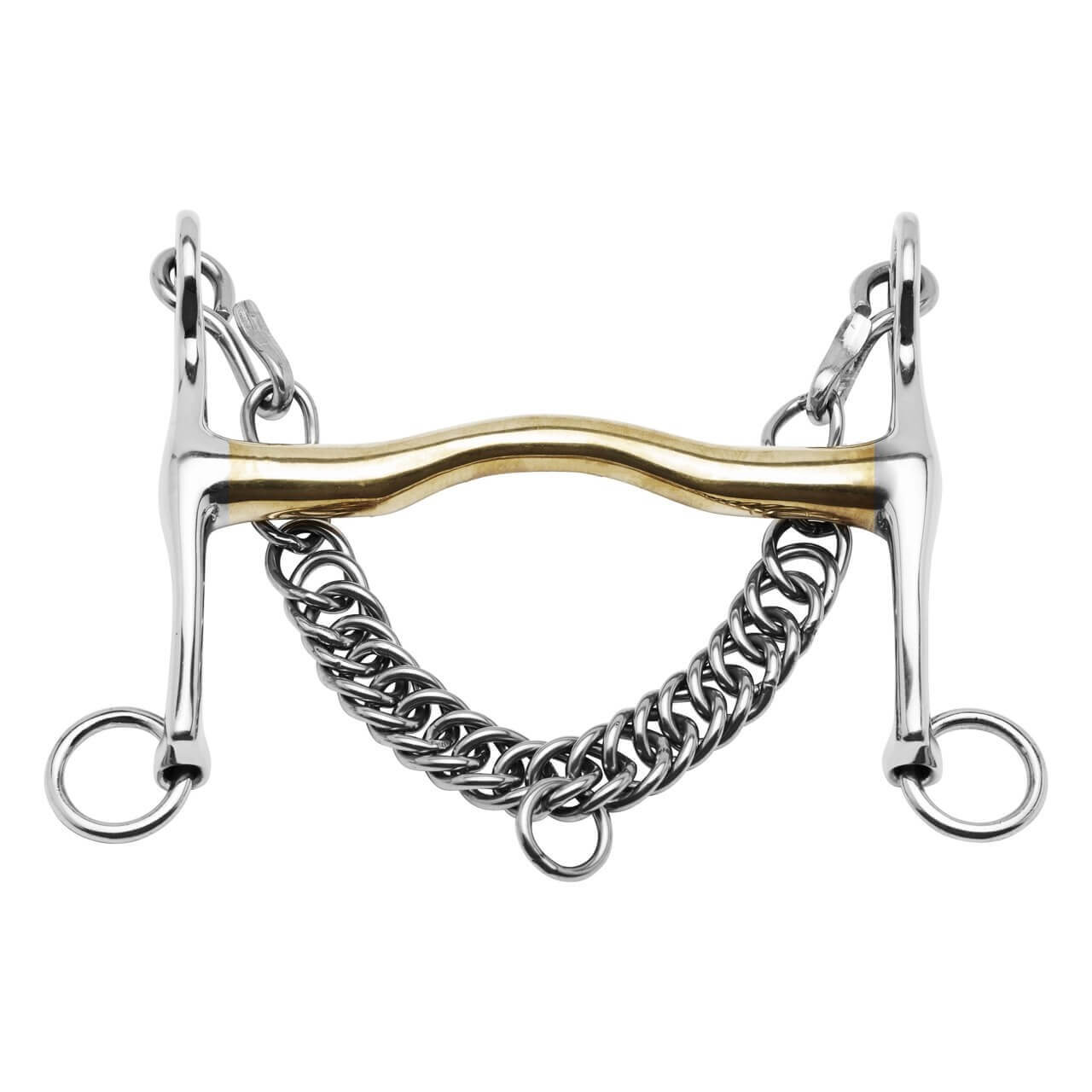
- Buckling of the cheekpieces and curb reins: The cheekpieces are attached to the upper shank, and the curb reins to the lower shank of the bit.
- Curb chain: An essential element of the double bridleis the curb chain, which is attached to the upper shank on the right and left.
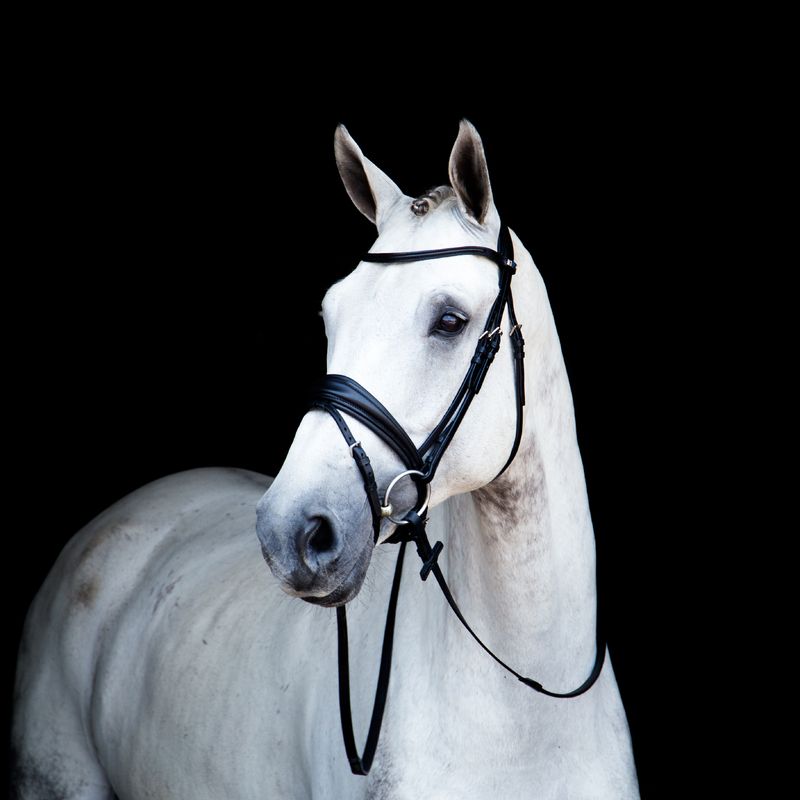
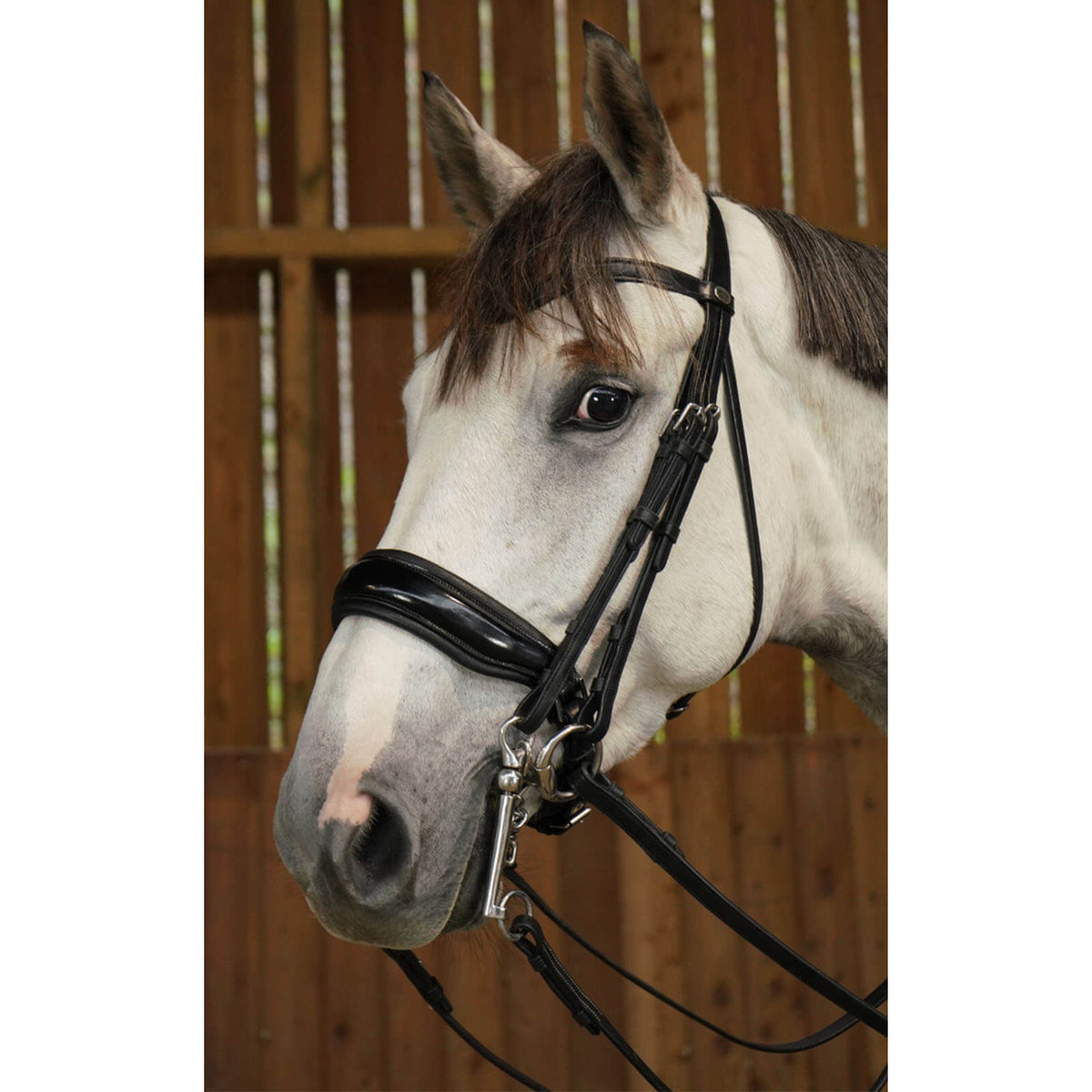
The snaffle bit lies behind the curb bitin the horse's mouth.
When buckled correctly, the curb forms an angle of approximately 45 degrees in the horse's mouth. Practically, this means that the action on the curb rein creates leverage that acts on the horse's mouth. The pull on the curb rein simultaneously creates pressure on the poll and the chin groove. An experienced rider can skillfully use this to achieve more precise collection of the horse, especially in demanding exercises.
In equestrian competitions, tests from Class L onwards are offered with both double bridles and snaffle bridles. In higher classes M and S, the double bridleis often mandatory, but there is an increasing possibility to ride tests in medium and difficult classes with a snaffle bridle as well. The rider can choose which bitting they prefer.
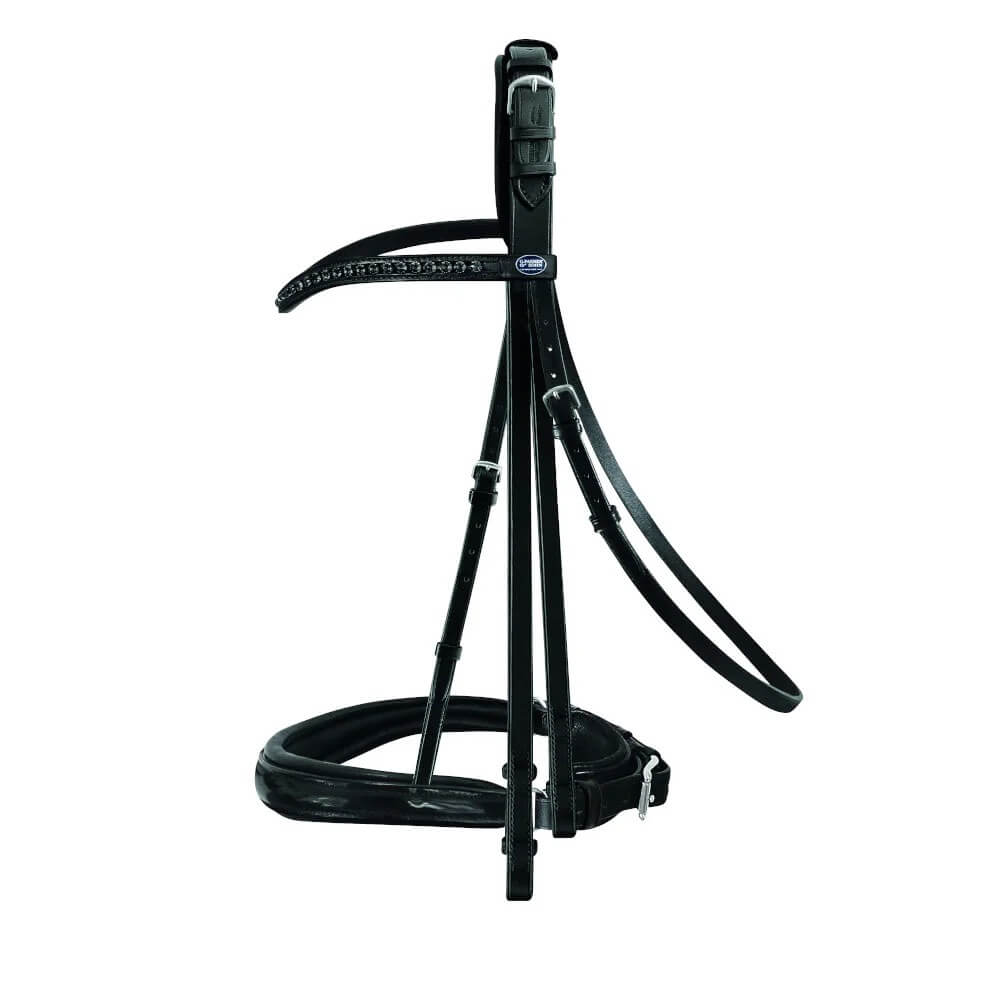
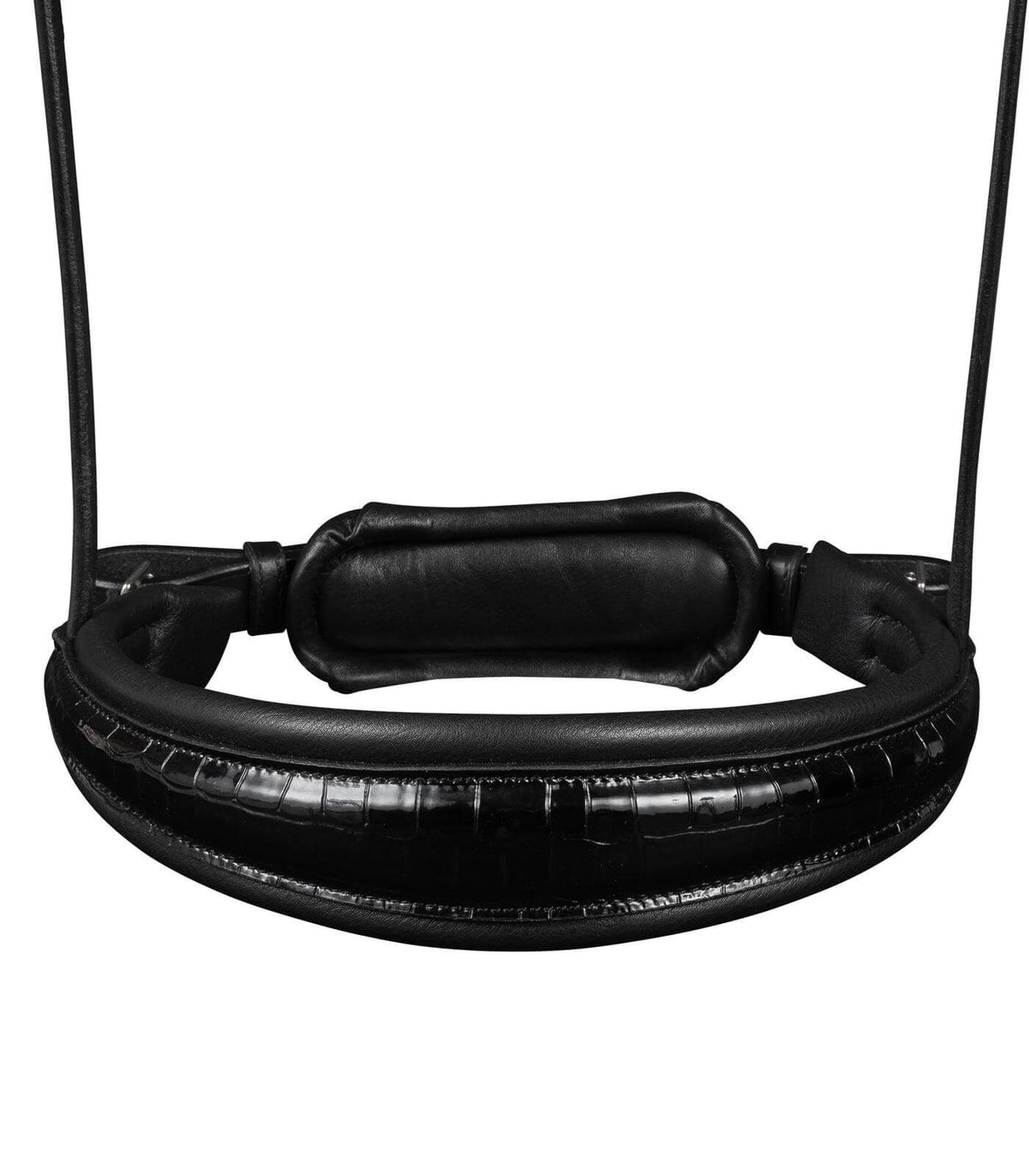
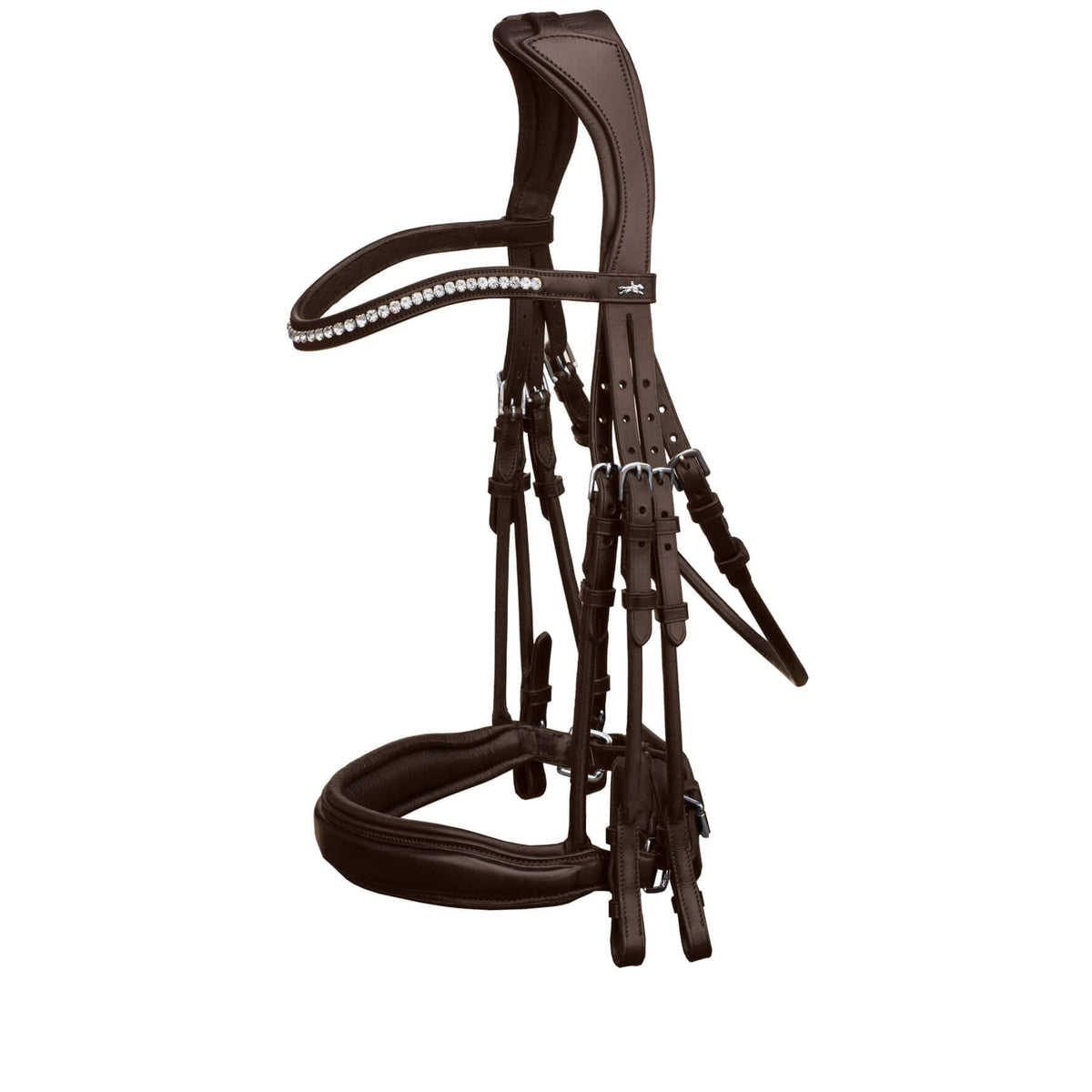
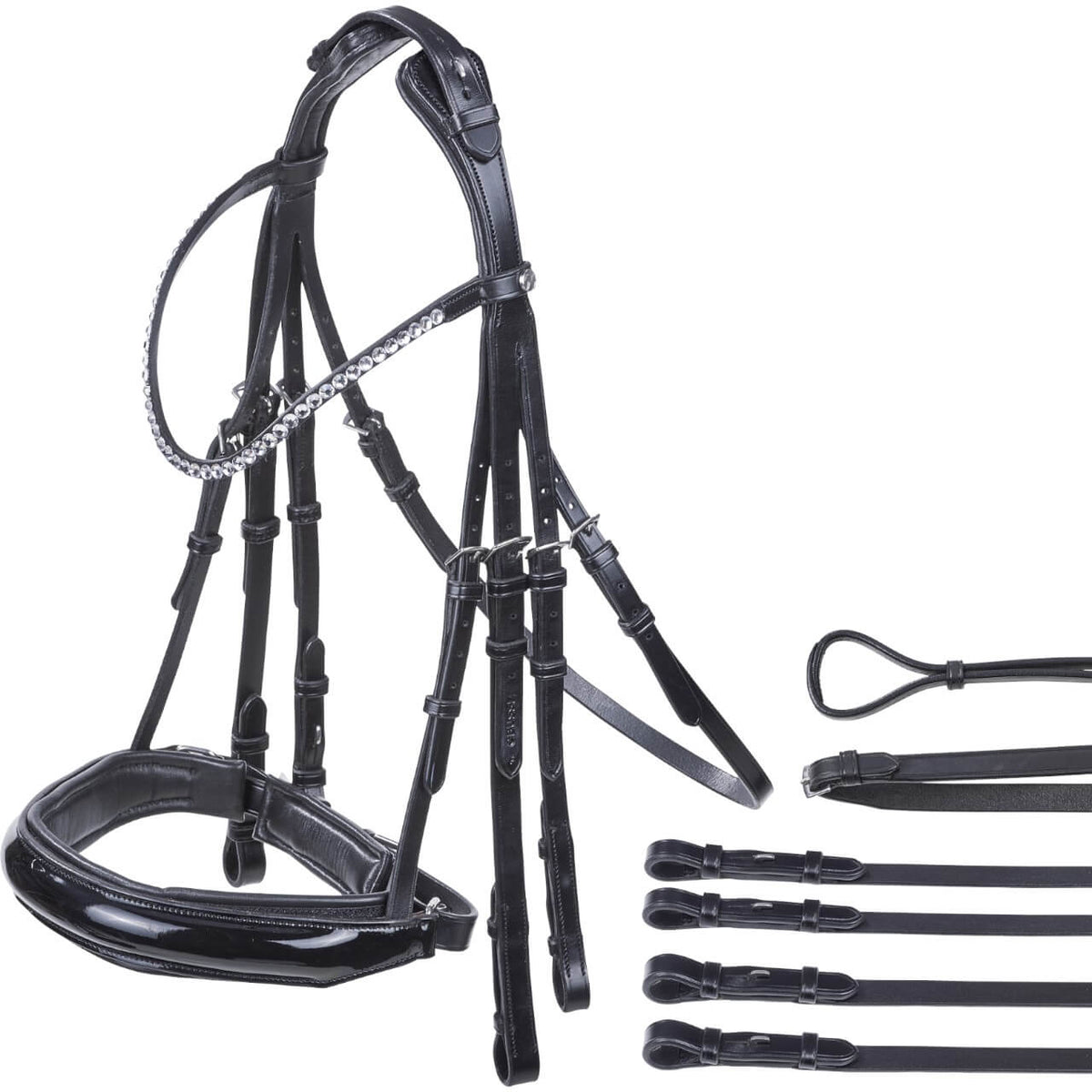
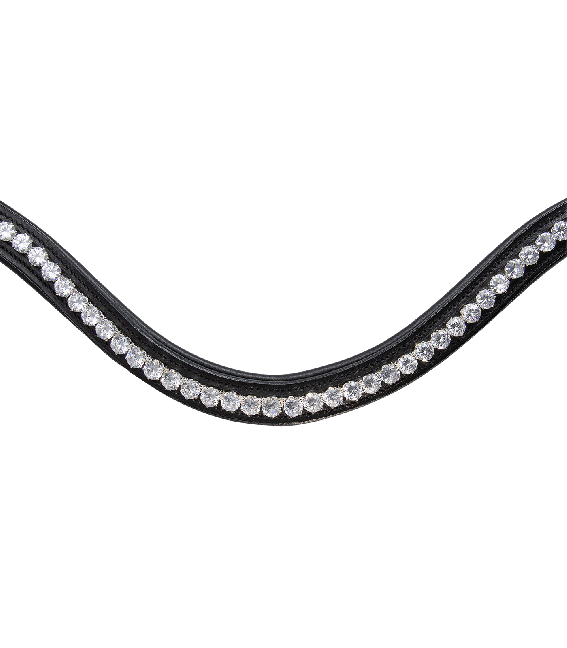
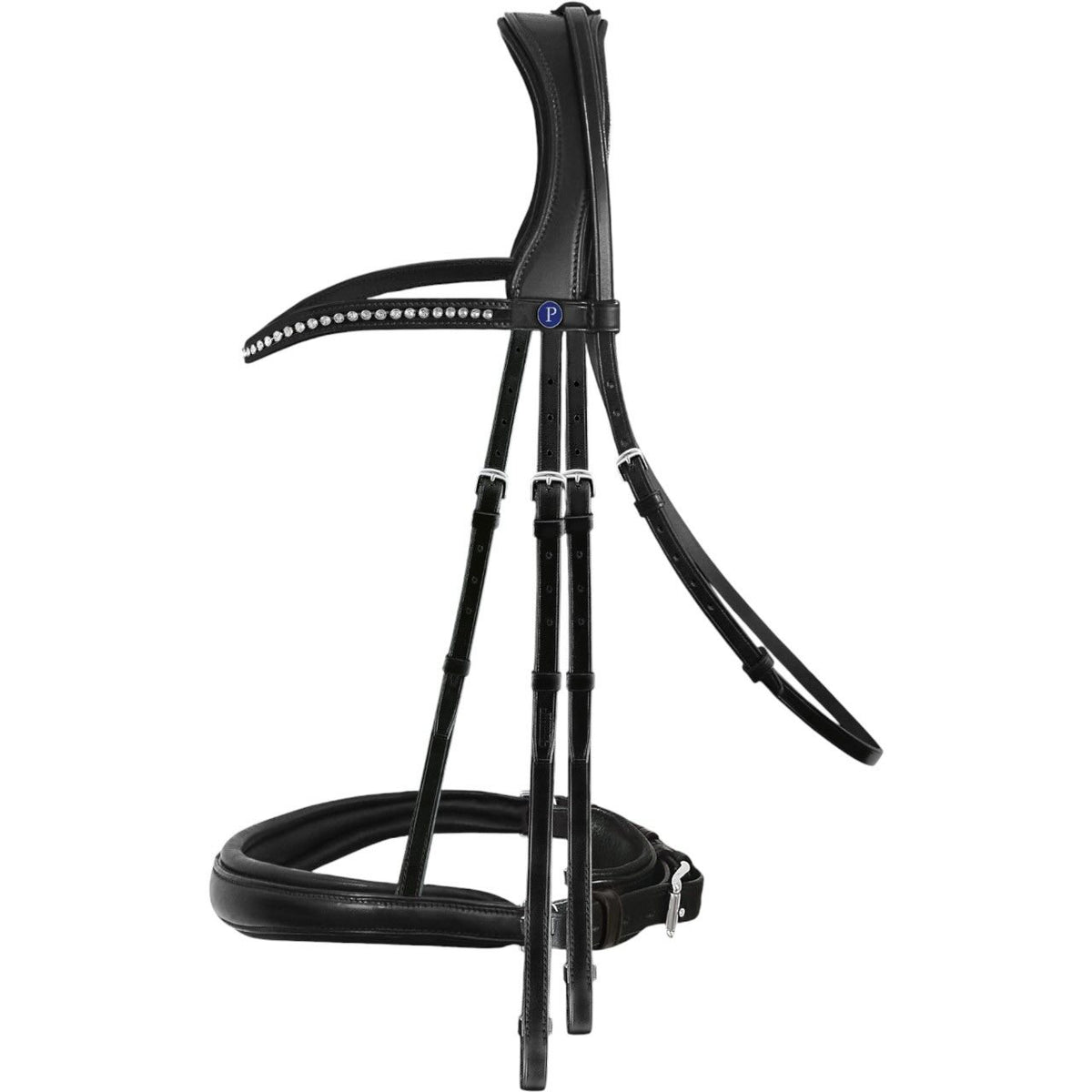
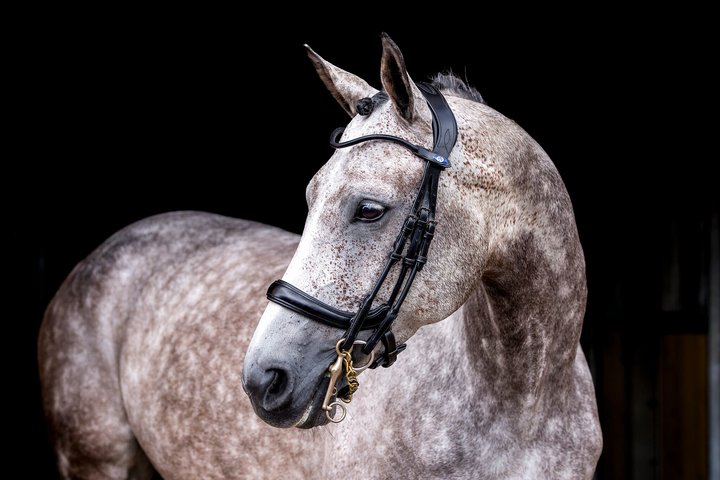
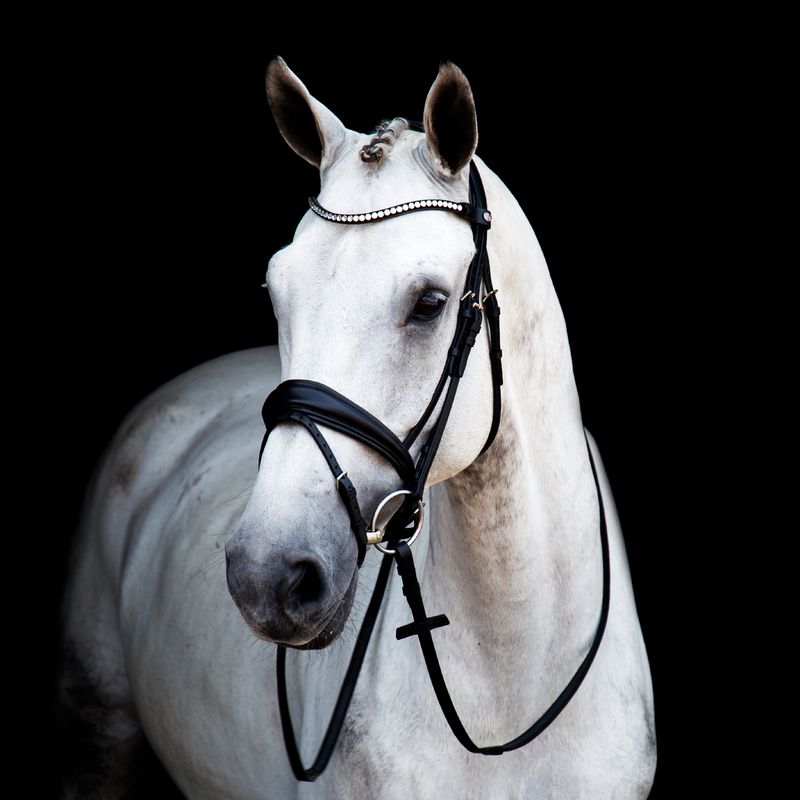
Despite the differences between double bridlesand snaffle bridles, there are also similarities, mainly in design and appearance. Double bridle modelsare available in classic black or stylish brown. They are made from high-quality leather and are characterized by careful workmanship. Visually, the double bridlesvary in flat or round stitched versions and are also available in patent leather look or with rhinestone-studded browbands. In our online shop, you will find double bridlesfrom Schockemöhle Sports, Busse, PS of Swedenor DY'ON, among others.