Sweet Itch in horses: causes, symptoms & the best measures
At a glance: Mane rubbed bald, tail head rubbed bloody, your horse can’t find peace? Sweet Itch is a nightmare for horse and owner. We show you what’s behind the allergy, how to recognize it, and with which measures – from the Sweet Itch Rug to special Skin Care to feeding – you can provide your horse with quick relief.
It’s a sight that pains every horse owner: your own horse rubs itself against trees, fences, and stall walls, rubbing its mane and tail bald, sometimes down to the blood. As soon as spring arrives, a battle begins for many horses and their owners against Sweet Itch – one of the most common and distressing skin diseases in horses. The good news: with the right knowledge and appropriate measures, you can significantly help your horse.
What is Sweet Itch?
Sweet Itch is an allergic skin disease that recurs annually and mainly occurs in the warm months (approximately March to October). The trigger is not – as many think – the weather itself, but a hypersensitivity reaction of the immune system to the saliva of certain biting insects, primarily:
- Black flies (Simuliidae) – the main culprits
- Biting midges (Culicoides species)
- Mosquitoes and horseflies – can worsen the symptoms
When female mosquitoes bite, they transmit certain proteins with their saliva. In a sensitized horse, the immune system reacts with an excessive immune response: it releases histamine and other inflammatory substances that cause severe itching, skin redness, and swelling.
By the way: Sweet Itch is also referred to in technical terms as “Sweet Itch", “Summer Itch", or “insect hypersensitivity".
Which horses are particularly affected?
In theory, any horse can develop Sweet Itch, but some breeds and horse types are clearly more susceptible:
- Icelandic horses – especially imports, since there are no biting midges in Iceland and they are not genetically adapted
- Friesians, Tinkers, Norwegians and other northern robust breeds
- Andalusians, Lusitanos, Barbs and other southern breeds not adapted to our insects
- Ponies and mixed breeds with sensitive skin
- Horses with a already weakened immune system or metabolic diseases
A genetic predisposition also plays a role: if parents or grandparents have Sweet Itch, the risk increases significantly.
Symptoms: How to recognize summer eczema
Summer eczema progresses in stages. The earlier you intervene, the better the chances of preventing a severe course.
early signs
- horse rubs itself more often on trees, fences, stall walls
- small pustules and wheals, often barely visible under the coat
- mane and dock of the tail look tousled or thinned out
- horse is restless, irritable, or appears nervous
advanced symptoms
- clearly bald spots on mane crest, withers, and dock of the tail
- thickened, wrinkled, or scaly skin
- weeping, bloody wounds from constant rubbing
- crust formation and secondary infections with bacteria or fungi
- foul odor of affected areas
- behavioral changes: withdrawal, loss of appetite, stress
typical affected areas
| body region | frequency | special feature |
|---|---|---|
| mane crest | very often | main area, often completely bald |
| dock of the tail | very often | “rat tail” pattern |
| belly seam | often | biting midges prefer the belly |
| withers and croup | often | secondary from rubbing |
| ears and head | sometimes | in severe cases |
| legs | less often | for very sensitive horses |
Important: If you suspect summer eczema, you should always consult a veterinarian. Other causes like skin fungus, mites, or lice can cause similar symptoms and must be ruled out.
The 4 pillars of summer eczema treatment
There is no miracle cure for summer eczema – but a proven approach based on four pillars. The more consistently you combine them, the better your horse will feel.
Pillar 1: Keep insects away
The most important step: The triggering insects must not get to the horse in the first place.
- Sweet Itch Rug with fine mesh fabric and neck cover
- Fly Mask with ear and nose protection
- Insect repellents like fly sprays and gels
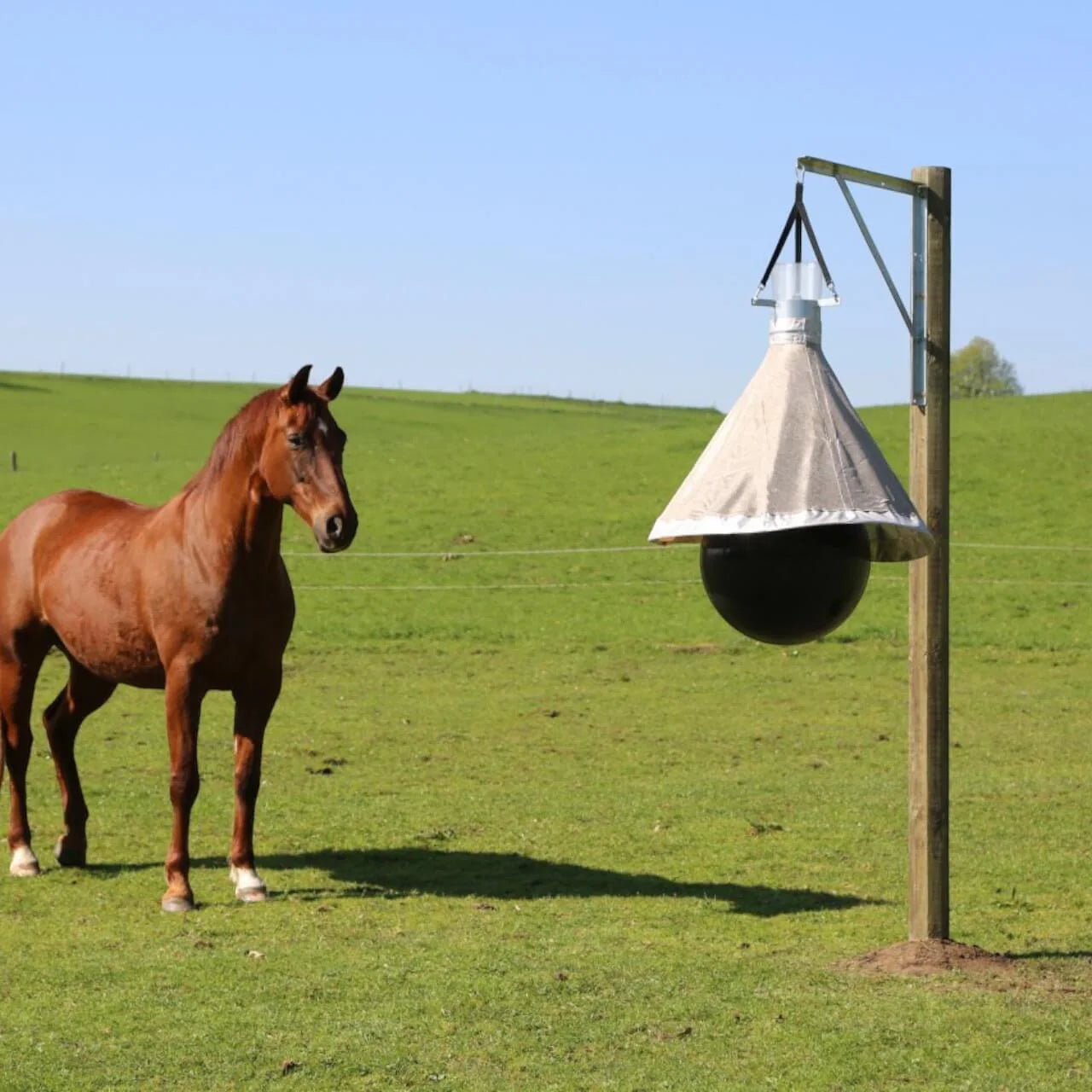
- Fly traps on the pasture reduce the population
- Stable hygiene: regular mucking out, no manure near the stable
- Grazing location: Midges avoid wind and sunny midday heat – avoid pastures near standing water or forests
- Adjust grazing times: Biting midges are most active at dusk – better to graze at midday
Pillar 2: Care for the skin and relieve itching
The stressed skin needs intensive care to regenerate and be protected against secondary infections.
- Daily care of affected areas with special lotions
- Gentle Washing with pH-neutral horse shampoo (every 1-2 weeks)
- Cooling gels for acute itching
- Nourishing oils for dry, flaky skin
Pillar 3: Optimize feeding
A needs-based feeding strengthens the immune system and can significantly alleviate the symptoms:
- Zinc supports skin regeneration
- Omega-3 fatty acids (e.g., from linseed oil) have anti-inflammatory effects
- Brewer’s yeast and milk thistle relieve the liver
- Black cumin oil can have immunomodulatory effects (feed only seasonally)
- Low sugar and starch – grain-reduced feeding relieves the metabolism
Pillar 4: Reduce stress
Stress significantly worsens symptoms. Ensure:
- A calm, stable herd structure
- Sufficient exercise (during protected times)
- Consistent daily routine
- Protection from additional stressors such as heat or noise
The right Sweet Itch Rug: What you should pay attention to
A Sweet Itch Rug is the most important mechanical protection against the triggers of summer itch. It differs from a normal Fly Rug by:
- Tighter weave that leaves no chance even for midges
- Neck extending over the ears or combinable with a separate mask
- Belly flap that covers the sensitive belly area
- Tail flap to protect the tailhead
- Quick-drying, breathable Material
Tip: Be sure to pay attention to the right Size. A rug that is too small will chafe and worsen the problem, while one that is too large will slip and not provide full protection.
Our top recommendations from the kavalio shop
Kentucky Horsewear Sweet Itch Rug with Neck – the premium solution in elegant gray with an extra-long neck extending over the ears. Quick-drying, sweat-absorbent, and antibacterial. Machine washable at 30 °C.
Bucas Sweet Itch Rug – the cult rug from the Irish brand Bucas in a striking zebra design. Tight-knit, robust, with Velcro fasteners on the neck – also ideal for skittish horses.
BUSSE Sweet Itch Rug Strong – the durable version made from quick-drying, UV-resistant, and breathable polyester Material. Specifically developed for horses with summer itch.
Waldhausen Sweet Itch Rug Basic – the affordable all-rounder rug with fixed neck cover and tail flap. Fine mesh fabric, breathable polyester, easy to care for.
Tip for mane care: If you want to additionally protect your horse’s mane from rubbing, the BUSSE Ekzemer Halsteil Extensive is a clever addition – also ideal for show and competition preparation.
Skin Care for summer eczema: What really helps
Your horse’s damaged skin needs daily attention. Important: Not all products are suitable for eczema skin – strong irritants or drying ingredients can worsen the condition.
Care routine for horses with eczema
- Morning: Check Sweet Itch Rug, examine skin areas, apply lotion if necessary
- Before pasture: Apply Insect Protection spray or gel
- Evening: Remove rug, check skin for new irritations, apply caring lotion to dry or reddened areas
- Weekly: Gentle washing with mild horse shampoo
Our top recommendations from the kavalio shop
whinny X bay Ekzemlotion “Juckt mich nicht" – our own brand lotion, specially developed for the sensitive skin of horses with eczema. With soothing essential oils, relieves itching and cares for stressed skin areas. 500 ml.
whinny X bay Spray Shampoo “An die Wäsche" Coconut Paradise – gentle washing for stressed skin. Cleans thoroughly without destroying the natural protective film. With a pleasant coconut scent.
Stiefel Eczem Protect – the proven special lotion for horses with summer eczema. Protects the skin and aids regeneration.
Leovet Care Lotion Tea Tree – penetrates deeply, soothes and regenerates irritated skin. Reduces itching and tendency to rub, stimulates hair growth. Mineral oil and microplastic free.
ZEDAN Schubber Gel – quick relief for acute itching. The natural gel soothes immediately and breaks the itch-scratch cycle.
Blue Hors Aloe Vera Gel – 98% pure organic aloe vera juice. Immediately soothes itching, insect bites, and summer eczema, seals damaged skin surfaces.
Insect Protection: The second line of defense
Blanket and mask are the mechanical protection, Insect Protection sprays and gels are the second line of defense. They should be applied to all exposed skin areas – especially on the belly, legs, and head.
whinny X bay Fly Spray "Mach die Fliege" – the Insect Protection spray with a pleasant herbal scent and Saltidin. Provides immediate and reliable protection against insects and flies. 500 ml.
whinny X bay Insect Protection Gel "Mach die Fliege" – with 8% Saltidin and 0.3% CIT. The gel adheres particularly well to horsefly hotspots such as belly, legs, and neck.
Kentucky Horsewear Fly Mask Skin friendly with ears – the premium mask for sensitive skin. With synthetic sheepskin on the forehead and nose, breathable and with 100% UV protection.
Fly traps for the pasture – significantly reduce the presence of midges, flies, and horseflies around the pasture. A horsefly trap like the KERBL TaonX Eco is a helpful additional protection.
Proven home remedies for Sweet Itch
Many horse owners swear by simple home remedies as a supplement to professional care:
- Coconut oil on belly and chest – midges cannot grip the oily surface
- Apple cider vinegar-water mix (1:5) as a spray – the smell repels midges
- Black seed oil in feed – known for its immune-modulating properties
- Nettle tea added to feed – has anti-inflammatory effects
- Aloe vera gel on irritated spots – soothes immediately
Note: Always discuss home remedies with your vet. What helps one horse may be ineffective or even harmful to another.
Preventing Sweet Itch: 7 tips for the upcoming season
If your horse has had Sweet Itch before, it is especially important to prevent it early the next year. Here’s the best approach:
- Act early: as soon as the first midges appear (often as early as March), use a Sweet Itch Rug
- Proper housing: open stable in a windy location avoids midge flight
- Pasture management: avoid pastures near water or forest edges
- Consider the time of day: during peak midge season, turn out at midday (midges are crepuscular)
- Adjust feeding: start supportive supplements early in spring
- Stable hygiene: keep manure piles far away, remove standing water, muck out regularly
- Strengthen the immune system: exercise, balanced feeding, low stress
FAQ: The most common questions about Sweet Itch in horses
What triggers Sweet Itch?
Sweet Itch is an allergic reaction to the saliva of biting midges and gnats. In sensitized horses, the immune system reacts with an excessive release of histamine, leading to severe itching and skin inflammation.
When does the Sweet Itch season start?
Mostly from March to October, depending on the weather. In mild winters, the first mosquitoes can appear as early as February. Once temperatures rise above 10 °C and the first insects start flying, it can begin.
Which horse breed most often gets summer sweet itch?
Especially at risk are Icelandic horses, Friesians, Tinkers, and other northern robust breeds as well as southern breeds like Andalusians and Lusitanos. Imported horses are at even higher risk because they are not genetically adapted to Central European insects.
Does a Sweet Itch Rug really help?
Yes. A close-fitting Sweet Itch Rug with neck cover is the most important protection against summer sweet itch. It prevents biting midges from reaching the horse at all, thus interrupting the trigger of the allergy.
Is summer sweet itch curable?
Unfortunately not – summer sweet itch is a chronic allergy that cannot be cured causally. However, with consistent treatment, insect protection, and proper care, the symptoms can often be alleviated enough for the horse to get through the summer largely symptom-free.
What can I do if my horse rubs itself raw?
Call the vet immediately. Open wounds must be treated to prevent secondary infections. Until the vet arrives: protect the horse from further insect bites, gently clean the affected areas, and change the rug if it is soiled.
Can cortisone help?
Cortisone can quickly stop itching during acute, severe flare-ups but is not a long-term solution. The decision is always made by the vet – cortisone has significant side effects, especially with long-term use.
Does black cumin oil help with summer sweet itch?
Black cumin oil is often used because it can have immunomodulatory effects. Important: feed only seasonally (March to October), as otherwise a habituation effect may occur. Discuss the dosage with your vet or feed advisor.
Conclusion: Summer sweet itch requires patience – and a good concept
Summer sweet itch is not something that can be “fixed quickly.” But: with a holistic concept of Sweet Itch Rug, intensive Skin Care, Insect Protection, and adapted feeding, you can significantly help your horse. Watch your horse closely, react at the first signs, and work closely with your vet.
Do you still need the right Sweet Itch Rug, a nourishing lotion, or effective Insect Protection? In the kavalio online shop you’ll find everything your sweet itch horse needs for a relaxed season – from premium brands like Kentucky Horsewear, Bucas, and BUSSE to our own care line whinny X bay.