The Tendon Apparatus
Have you ever thought about how your horse’s legs are built? No? We’ll explain it to you.
The front legs carry up to 65% of the total weight and are especially stressed during movement, braking, or jumping. Therefore, the front legs are much more frequently affected by tendon injuries compared to the hind legs. The hindquarters provide propulsion and stability. The horse’s legs mainly consist of bones, joints, tendons, and ligaments.
Tendons are bundles of fibers closely connected to muscles and bones. They are responsible for transmitting force into movement energy. Did you know that tendons in horses are not fully matured until about 6 years of age? That’s why it’s especially important, particularly with young horses and during breaking-in, to start slowly and maintain a good warm-up routine to avoid overloading the tendons.
Recognizing Symptoms
Typical symptoms of a tendon injury include swelling, warm legs, or increased sensitivity to pain at the affected spot. You should regularly feel your horse’s legs to notice slight swelling or inflammation early on. Other symptoms that could indicate tendon problems are relieving the affected leg or lameness, especially on soft ground. If you notice symptoms like these, you should definitely contact a veterinarian.
Causes
How does a tendon injury occur, and what can you possibly do to prevent it?
Overweight, poor muscle development, muscle fatigue, or overstretching are the most common causes of tendon injuries. Tendons are subjected to high stress daily. When the load limit is exceeded, it leads to overstrain that the tendons can no longer bear. Misalignments of the hooves or poor shoeing can also affect movements and weight distribution, increasing pressure on the tendons.
Adequate free movement and supportive muscle training can strengthen your horse and thus help prevent tendon injuries. Proper warm-up is especially important. Take enough time during every training session to mobilize and warm up your favorite. This way, you can counteract acute overloading of the tendons.
Another factor that can promote tendon injuries is a lack of nutrients. Manganese, selenium, collagen, and magnesium ensure a stable Joints & Mobility. A deficiency in these nutrients can lead to weak tendons and faster overstrain. Alpurial Sehnenstark can specifically support tendons, ligaments, and connective tissue and provides valuable contributions to daily feeding through high-quality ingredients. With good nutrient supply, you can optimally prevent tendon injuries or joint problems.
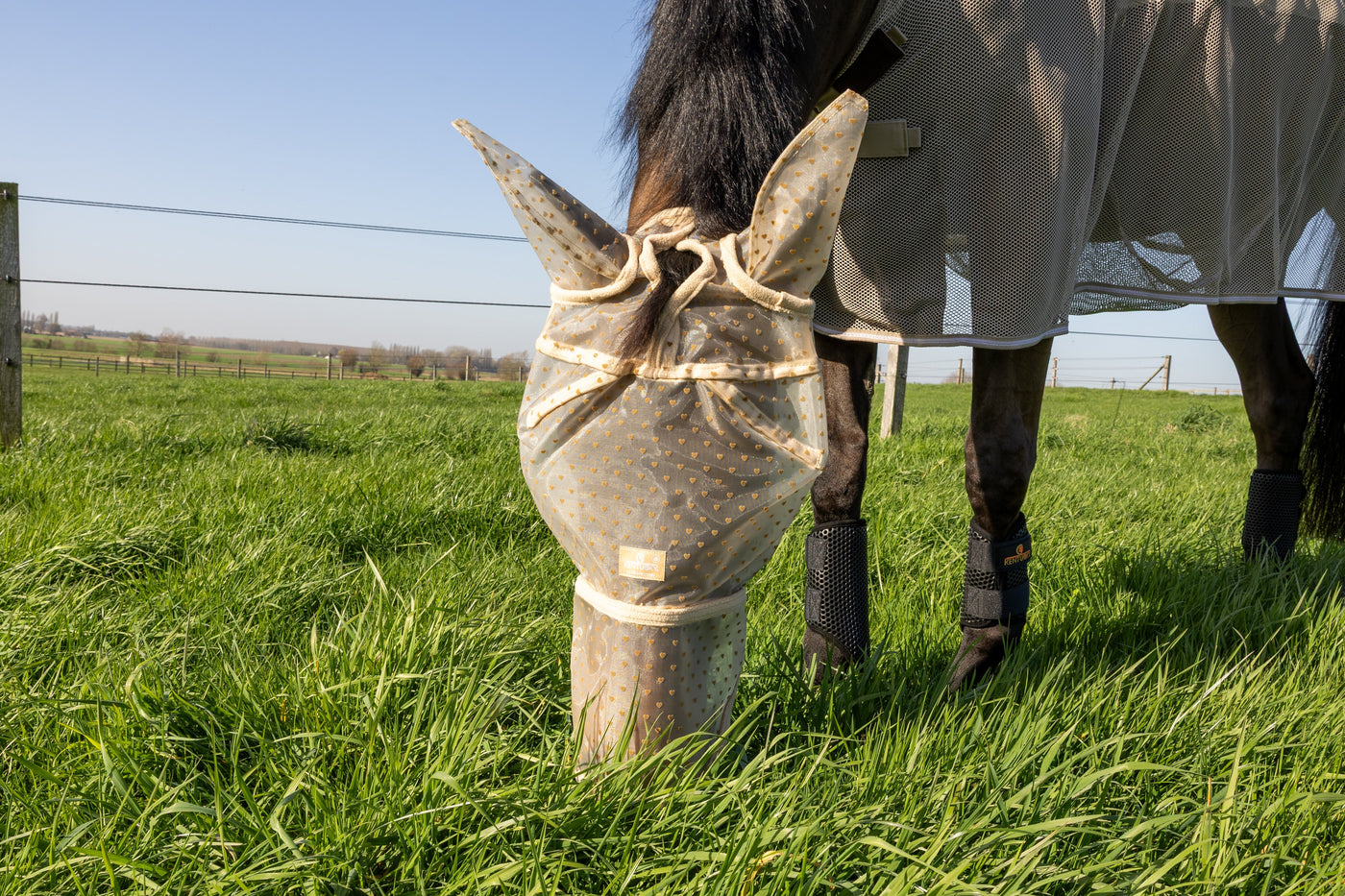
If you want to be on the safe side, you can especially use Brushing Boots during training or in the paddock. Because of the superficial position of the tendons and little muscular protection, injuries from kicks or stumbling can occur quickly from the outside. With Leg Protection, you can possibly prevent such injuries.
Treatment
If a tendon injury has been diagnosed, you should of course first discuss the specific treatment with your veterinarian. Besides this targeted treatment method, there are some tips and tricks on how you can positively influence the healing process.
First of all, it is important to give your horse plenty of rest and relief. Ideally, you put your horse in a paddock that is not so large that it can run around and romp, but also not so small that tight turns and circling are provoked. Box toys, like the Kentucky Horse Toy, can sweeten your favorite’s box rest and prevent boredom.
For an acute tendon injury, it can be useful to cool the leg extensively to reduce swelling and inflammation. The Stay Cool Cooling Gel from whinny X bay is suitable for this. Simply apply it to the affected area, and ingredients like menthol and eucalyptol provide a pleasant cooling effect.
Once the swelling has subsided and the tendon injury is no longer acute, you can start treating the leg with warmth. The fiber bundles have poor blood circulation, which is why the healing process is usually very lengthy. Warm treatment can stimulate blood flow and promote healing. For this, you can use, for example, the Magic Mineral from whinny X bay. The paste can be used for cooling and warming and is therefore a real all-rounder for the best possible treatment around the tendon injury.
The Therapy Brushing Boots from Waldhausen can become your perfect companion during regeneration. Thanks to the innovative 3-in-1 function, you can cool, warm, and stimulate blood circulation through additional vibration panels. This makes it possible to reduce scar tissue formation, which is later more prone to re-injury.
The diagnosis can be frightening at first, and of course, there are nicer things than a forced break. But don’t get discouraged; as soon as you get the OK from the vet, you can work on your connection with groundwork and walks and grow even closer together.