Finally spring! The sun is out more often, the meadows are turning green, and your horse is already pawing impatiently at the pasture gate. But be careful: those who graze their horse too quickly risk serious problems – from loose stools and colic to laminitis. In this guide, you will get a tried-and-tested grazing plan, a clear weekly table, and all the answers to the most important questions about properly grazing your horse.
Why proper grazing is so important
Over the winter, the horse's gut is finely tuned to hay. Hay is dry, high in fiber, and ferments relatively slowly. Fresh pasture grass, on the other hand, contains significantly more water, sugar, protein, and fructan – and this is exactly where the problem lies.
Your horse's gut flora consists of billions of microorganisms that have adapted to hay for months. A sudden switch to grass overwhelms this sensitive system: undigested carbohydrates reach the large intestine, where gases, acids, and toxins form. The consequences can be:
- Loose stools and diarrhea
- Bloating and colic
- Laminitis – in the worst case, life-threatening
- Stress on liver and kidneys
- Worsening of metabolic diseases such as EMS or Cushing's
A gentle transition gives the gut flora 2 to 4 weeks to adjust – and that is exactly the time you should plan for grazing.
When is the right time to start grazing?
There is no fixed date for the start of grazing – even though May 1st is traditional in many stables. Three factors are decisive:
1. The beer bottle height as a rule of thumb
The most well-known rule: The grass should be at least 20 cm high – about as tall as a beer bottle. For metabolically sensitive horses, ponies, or robust breeds, 25 to 30 cm is even advisable. The longer the blade, the more crude fiber and the better the digestibility.
2. The right time of day
The fructan content in the grass fluctuates throughout the day. It is highest in the morning and lowest in the late afternoon. Therefore, the rule is: graze your horse in the afternoon – not in the early morning hours.
3. The weather
It becomes dangerous during frosty nights and sunny days. This combination causes the fructan content to skyrocket. Ideal grazing weather is overcast, mild days – even if the weather is less inviting for us.
Grazing your horse with a plan: The weekly overview table
So you don't have to guess, here is a proven grazing schedule that suits most healthy horses:
| Day / week | Pasture time per day | Notes |
| Days 1-3 | 5-10 minutes | On the lead, in the afternoon |
| Days 4-7 | 15-20 minutes | Daily increase by 5 minutes |
| Week 2 | 30-60 minutes | Increase in 10-minute steps |
| Week 3 | 1-2 hours | First free turnout sessions possible |
| Week 4 | 2-4 hours | Possible in the morning and afternoon |
| from week 5 | Gradual full turnout | Depending on the horse, turnout takes longer |
Important: This table is a guideline. Watch your horse closely – if you notice signs of digestive problems, go back one or two days and only increase again when everything is in the green zone.
Step-by-step: How to succeed with turnout
1. Feed hay before turnout
A full stomach with roughage prevents your horse from rushing hungry onto the pasture and overeating. The structure of the hay buffers the rapidly fermentable sugar in the grass.
2. Start on the lead
For the first few days, lead your horse on a lead rope onto the pasture. This way you have precise control over the time and can observe your horse closely.
3. Provide fresh water
Horses take in a lot of fluid with the grass, urinate more often, and need salt and water. A salt lick on the pasture is part of the basic equipment.
4. Include exercise
The extra calories from the grass should be burned off. Regular work keeps the metabolism going and prevents overweight – one of the biggest risk factors for laminitis.
5. Reduce concentrate feed
As pasture time increases, the grass covers a large part of the energy needs. You should adjust concentrate feed step by step – otherwise, overweight and metabolic problems threaten.
Protection from injuries: Brushing Boots, bell boots & more
When your horse is allowed back on the spring pasture for the first time after weeks in the paddock, the joy of life is boundless: bucking, galloping, and frolicking wildly. It is exactly in these moments that tendon, ligament, and hoof injuries happen particularly quickly.
With the right protective gear, you specifically prevent:
- Brushing Boots protect tendons and fetlock joints from blows and strikes
- Bell boots protect bulbs and horseshoes from strikes
- Warm up horses briefly right before turnout – this prevents strains
Tip: A good equestrian online shop like ours offers the right Brushing Boots and bell boots in all sizes and materials.
Flies, horseflies, and insects: How to keep your horse relaxed
With the first sunshine unfortunately come flies, horseflies, and other pests. Being prepared here saves your horse a lot of stress:
- Fly Masks protect eyes, ears, and nostrils
- Fly Rugs keep the whole body free
- Fly Repellents and natural sprays act quickly and precisely
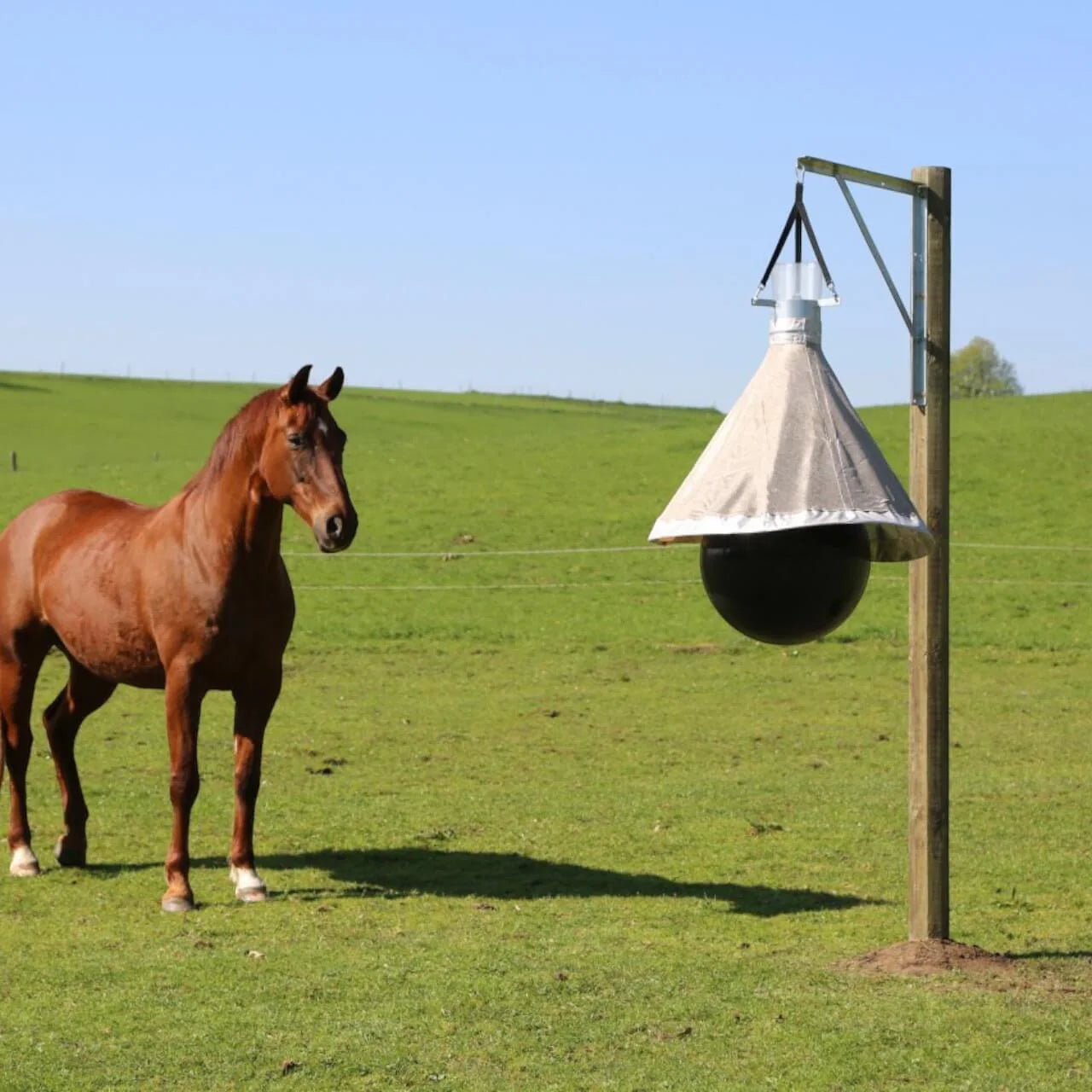
- Fly traps like the attractant trap from Ecobusters sustainably reduce insect pressure on the pasture – environmentally friendly, without disturbing bees or birds. One load lasts up to 60 days.
In our shop, you’ll find a wide selection of Fly Protection for every horse size and need.
Support metabolism from the inside
Besides external protection, you can also optimally prepare your horse internally for the grazing season. Proven ingredients are:
- Chamomile and fennel – anti-inflammatory, antispasmodic, good for gut flora
- Peppermint – soothes the stomach
- Dandelion and milk thistle – support liver and kidneys in detoxification
- Brewer’s yeast – promotes gut health
- Bitter substances (yarrow) – stimulate saliva and gastric juice production
Pay attention to your horse’s individual needs when it comes to Feed Supplements – more is not always better. For chronically ill horses or metabolic diseases, it’s best to discuss feeding with your veterinarian or a feeding consultant.
Risk groups: These horses need special care
Not every horse tolerates grazing the same way. You should be especially attentive with:
- Ponies and robust breeds – prone to insulin resistance and laminitis
- Horses with EMS, Cushing’s, or PSSM – only from 25 cm grass height and only on cloudy days
- Laminitis patients – often only heavily rationed grazing or with grazing muzzles
- Overweight horses – portioned grazing instead of full grazing
- Seniors with sensitive gastrointestinal tracts
For these horses, it often makes sense to extend the grazing period to 6 weeks or longer.
Warning signs: When you must react immediately
Watch your horse carefully throughout the entire grazing period. React immediately if you notice any of these symptoms:
| Symptom | Possible cause | Measure |
| Watery manure, diarrhea | Overloaded gut flora | Reduce grazing time, increase hay |
| Frequent rolling, lying down, looking at the belly | Colic |
Provide exercise & Colosan – wait to see if there are bowel sounds and stool is passed. If not, call the veterinarian immediately |
| Warm hooves, stiff gait, relieving posture | Laminitis | Call the veterinarian immediately |
| Swollen legs | Liver strain, protein excess | Reduce grazing time, cool down, schedule an appointment with the veterinarian |
| Eczema | Liver strain, protein excess | Adjust grazing time, schedule an appointment with the veterinarian |
| Apathy, loss of appetite | Metabolic imbalance | Contact a veterinarian or feed consultant |
Many situations can resolve themselves through adjusted routines. However, the rule also applies here: If you are unsure or the horse’s health does not improve or even worsens, a vet must be called.
Our tip for the weekend: Veterinarians also have on-call services. Just call your vet, and the answering machine will tell you which vet in your area is on emergency duty. Alternatively, the way to the nearest animal clinic is the right choice for you and your horse.
Conclusion: With a plan and patience into the grazing season
Proper grazing introduction is no rocket science – but it requires time, patience, and a careful eye on your horse. Those who proceed step by step, watch the weather, protect risk groups especially, and support their four-legged friend with the right equipment and feeding can look forward to a worry-free grazing season.
Do you still need suitable Brushing Boots, Fly Protection, or Feed Supplements for the grazing introduction period? In our shop, you’ll find everything you need for a relaxed start to the grazing season – so your horse can fully enjoy the summer.
FAQ: The most common questions about introducing horses to grazing
How long does grazing introduction take for horses?
Usually 2 to 4 weeks. For sensitive horses, ponies, or metabolic patients, the grazing introduction process can take 5 to 6 weeks.
How many minutes per day should I start grazing?
Start with 5 to 10 minutes on the first day and increase by a few minutes daily. After one week, 30 minutes is realistic; after two weeks, 1 to 2 hours.
At what time of day should I introduce my horse to grazing?
Best in the afternoon, because fructan content is lowest then. Avoid early morning hours – especially after frosty nights.
When is grass particularly dangerous for my horse?
With the combination of cold nights and sunny days. Then the grass stores especially high amounts of fructan – the biggest risk for laminitis.
Do I also need to introduce grazing gradually when changing pastures in summer?
Yes. Even when switching to a new pasture or after a longer stable period (e.g., after an injury break), you should reintroduce grazing gradually – though in a shorter time.
What to do if the stable does not introduce grazing carefully?
Talk to the stable manager. If no solution can be found, you can let your horse graze by hand daily in advance and stabilize the gut with high-quality roughage, mineral feed, and herbs.
Does brewer's yeast help with grazing introduction?
Brewer's yeast can support the gut flora and is often fed during the grazing introduction period – but it does not replace careful grazing introduction.